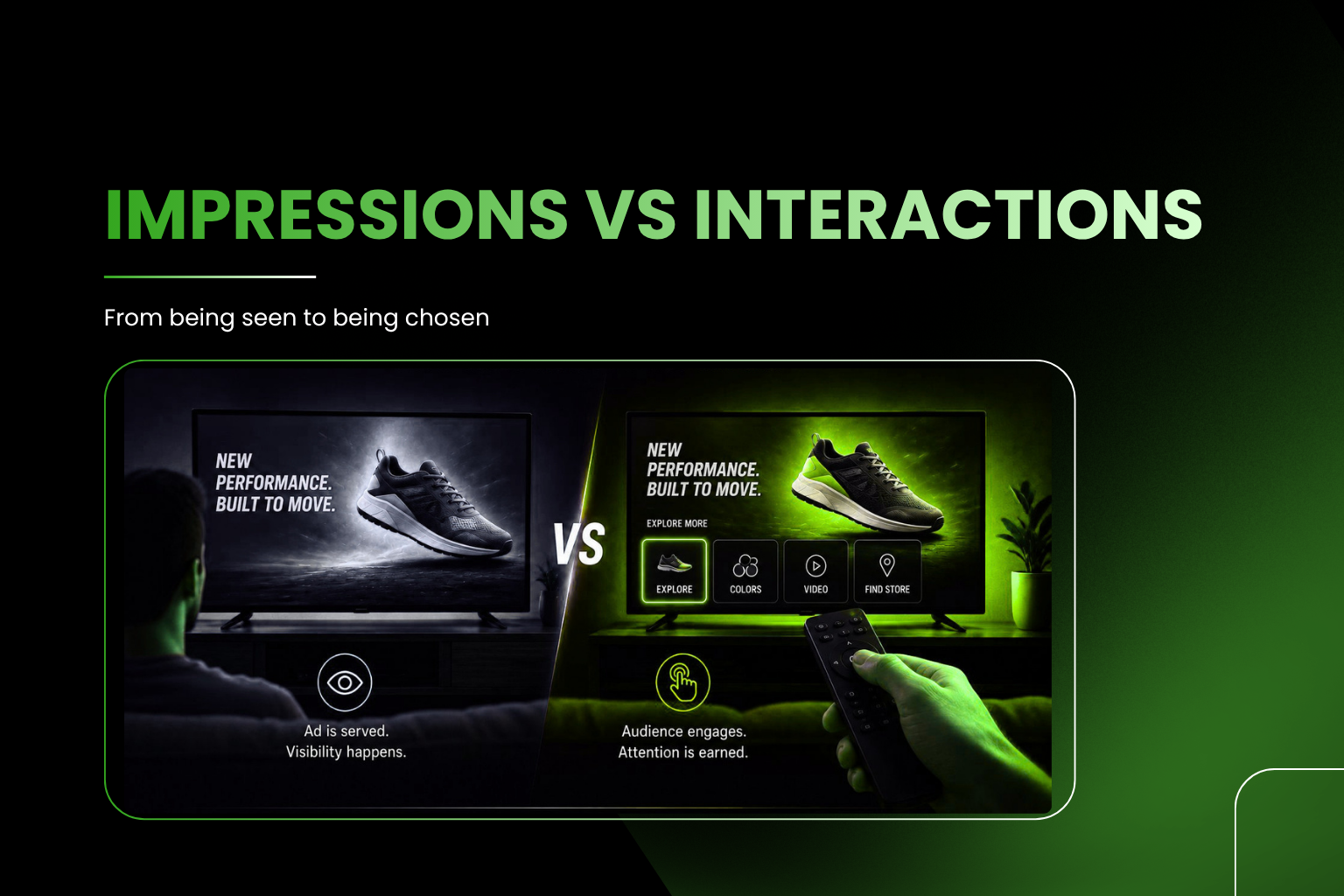
We've spent years optimising advertising for the moment of exposure. It's time to optimise for what happens after it.
An impression tells us that an ad reached someone. But in a media landscape where consumers are exposed to thousands of messages every day, being delivered onto a screen is hardly the same as earning attention.
The more important question is what the audience does next.
Do they stay? Do they explore? Do they tap? Do they choose to engage?
Because an impression is delivered. An interaction is earned.
Exposure Was the Old Advantage. Attention Is the New One.
Reach will always matter. Brands need scale.
But scale alone doesn't tell us whether the creative connected.
The first few seconds of an ad determine whether a viewer notices or moves on. That moment creates visibility but the opportunity after it is where advertising can become more valuable.
When a viewer taps, explores, browses or interacts, they are no longer passively consuming an ad. They are participating in the experience.
That is a fundamentally different signal.
Creative Has to Do More Than Get Seen
This changes the job of creative.
If the objective is impressions, creative needs to win the first glance.
If the objective is interaction, it needs to create enough relevance or curiosity to make someone take the next step.
That means advertising can no longer be designed purely around delivering a message. It has to be designed around creating a reason to engage with one.
And Connected TV makes that shift particularly interesting.
The television screen is evolving from a passive viewing surface into an environment where brands can invite audiences to explore, interact and continue the experience.
That is the opportunity behind NewsroomAI by Huella - creating interactive CTV experiences designed to turn visibility into participation and attention into something more measurable.
The Question Marketers Should Be Asking
The industry has become very good at measuring how much advertising we deliver.
The next step is getting better at measuring what that advertising makes people do.
Because the future of effective advertising won't be defined by impressions versus interactions.
It will be defined by how effectively brands turn one into the other.
Don't stop at impressions. Build for interaction.

