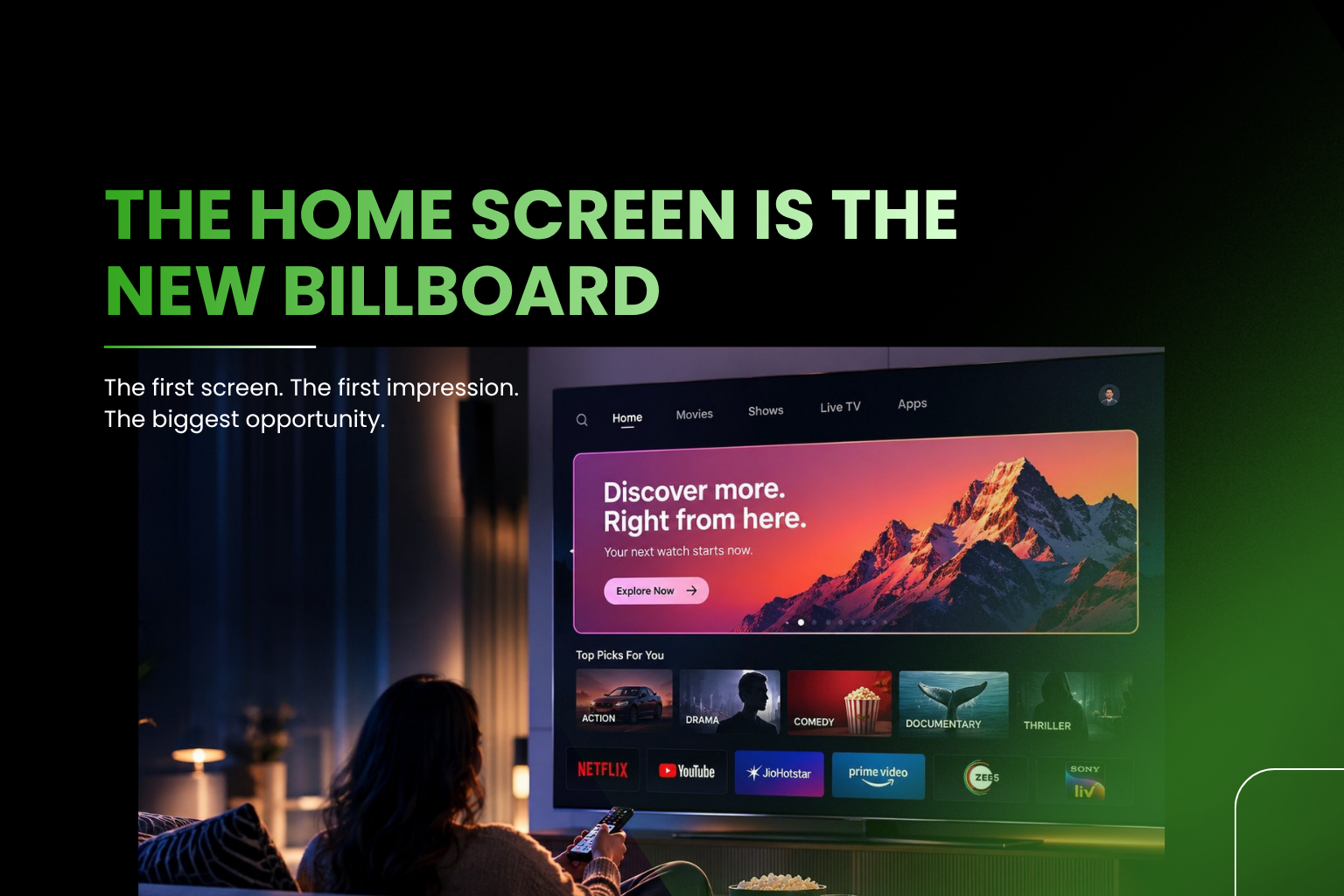
For decades, the biggest brands competed for the most visible advertising real estate. Highway billboards, newspaper front pages and primetime television all delivered one thing above everything else: visibility at scale.
Today, that real estate has changed.
The most valuable billboard isn't outdoors anymore. It's the first screen millions of consumers see every time they switch on their television: the Connected TV home screen.
Before viewers open Netflix, YouTube, JioHotstar or any other streaming platform, they arrive at a single interface that shapes every viewing journey. It is where content is discovered, choices are made and viewing sessions begin. Unlike traditional advertising, which competes for attention after a programme has started, the home screen owns the first moment of attention.
As Connected TV adoption continues to grow, brands are beginning to recognise that this isn't just another media placement. It is becoming one of the most influential pieces of digital real estate in the living room.
The First Moment of Attention
Traditional television advertising has always been built around interruption. A commercial appears between programmes or before a video that someone has already decided to watch.
The Connected TV home screen changes that equation.
When viewers land on the home screen, they haven't made a content decision yet. They are actively browsing, comparing recommendations and deciding where to spend their time. The remote is in their hand, their attention is on the screen and every visual element contributes to that decision-making process.
This is what makes the home screen fundamentally different. Instead of interrupting entertainment, it becomes part of the entertainment discovery experience.
That shift creates a significantly stronger opportunity for brands to be noticed, remembered and engaged with.
By the Numbers
The growing importance of the home screen is reflected in the data.
Together, these numbers point to a larger trend. As audiences continue migrating to Connected TV, the home screen is becoming the one environment that every viewer experiences, regardless of which streaming service they eventually choose.
More Than Just Visibility
Unlike a traditional billboard, the Connected TV home screen combines premium visibility with the capabilities of digital media.
A hero banner can establish immediate brand presence the moment the television powers on. Interactive tiles can lead viewers directly into trailers, product experiences or branded destinations with a single click of the remote. Contextual placements can appear naturally alongside content recommendations, making brands feel integrated into the viewing experience rather than inserted into it.
This is where Connected TV begins to separate itself from both linear television and conventional digital advertising. The objective is no longer just to generate impressions. It is to create discovery, interaction and meaningful engagement from the very first screen a consumer sees.
Designing for the Living Room
The home screen also demands a different creative mindset.
Assets designed for mobile feeds or desktop banners rarely translate well to a large television display viewed from several feet away. Successful Connected TV creative prioritises bold visual storytelling, simple messaging and intuitive interactions that feel effortless with a standard remote.
The best experiences don't compete with the interface. They complement it.
As Connected TV continues to redefine how audiences discover and consume entertainment, the home screen is emerging as the new premium advertising canvas. It offers the scale of television, the precision of digital media and the ability to influence consumers before they've even chosen what to watch.
For brands, that makes it far more than another advertising placement.
It is the first impression in the viewing journey, and increasingly, the most valuable one.

